Important rules when participating in traffic
Here is the clean English translation, without any added explanation:
To take the driving test and obtain a driver’s license in Japan, it is very important to understand the basic traffic rules.
Below are the rules that drivers must firmly grasp when participating in traffic in Japan.
1 Prohibition of driving without a license and prohibition of drinking alcohol while driving
In Japan, because there have been many serious accidents related to unlicensed driving and driving after drinking alcohol, these actions are punished very severely.
You must never drive without a license or after consuming alcohol.
2 Keep to the left side of the road
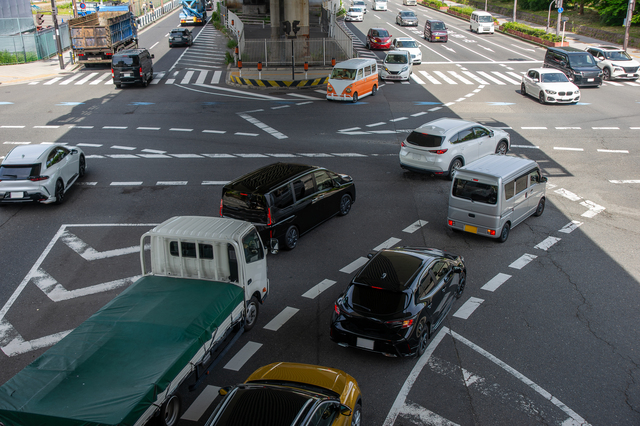
In Japan, cars and motorcycles travel on the left side of the road.
Pedestrians walk on the right side, but if there is a sidewalk, they must use the sidewalk. In addition, bicycles do not require a license, but they are classified as “vehicles,” so they must also travel on the left side.
3 Coming to a complete stop at the “Stop” sign (止まれ)
At places with the red triangular “止まれ” (Stop) sign, the driver must come to a complete stop, check left and right, and only then proceed. This sign is usually placed at intersections with poor visibility, and many accidents occur because drivers fail to stop as required.
4 No running red lights
Traffic lights for vehicles have three colors—green, yellow, and red—and they change in a fixed cycle.
• Green: allowed to go
• Yellow: indicates it is about to turn red; in principle you must stop (except when sudden braking would be dangerous)
• Red: absolutely no going
Pedestrian signals have only green and red, and a flashing green indicates that it is about to turn red. Violating traffic signals can lead to serious accidents, so careful observation is necessary.
5 Wearing seat belts is mandatory for all seats
Not only the front seats but also all rear seats are required to wear seat belts. Seat belts help protect your life and the lives of those riding with you, so always fasten your seat belt when getting in the car.
6 Using mobile phones while driving is prohibited
Holding a phone to make calls, send messages, or operate it while driving is prohibited. Even a few seconds of distraction can cause a serious accident.
7 Maximum speed limits depending on each type of road
• Residential areas: 30–40 km/h
• Regular roads: 50–60 km/h
• Expressways: 80–100 km/h
Speed limits are always indicated on traffic signs, so they must be strictly followed.
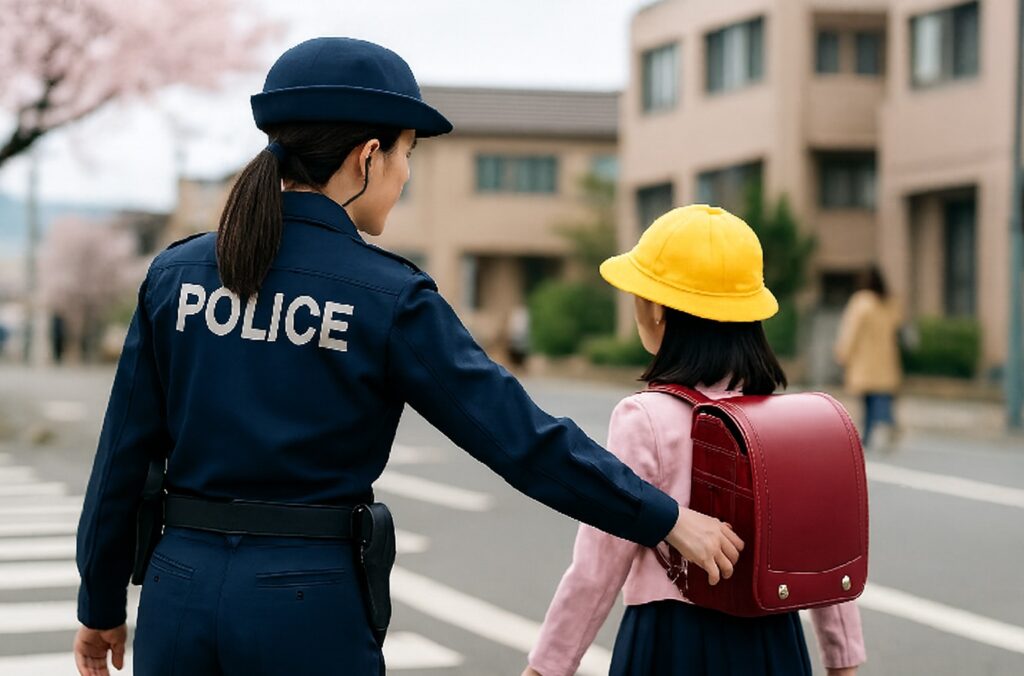
8 Pedestrians have priority at crosswalks
At a crosswalk without traffic lights, pedestrians always have priority. If someone is about to cross, vehicles must come to a complete stop and give way.
9 Turn signals (indicator lights) must be activated early
When turning or changing lanes, you must activate the turn signal at least 3 seconds in advance to alert the vehicles behind you.
Signaling early helps prevent collisions and ensures safety.
10 Keep a safe distance from the vehicle in front
You must not drive too close to the vehicle in front. For example, at 40 km/h, a car travels more than 10 meters in just one second. If you do not keep a safe distance, you may not have enough time to brake when the vehicle ahead stops suddenly.
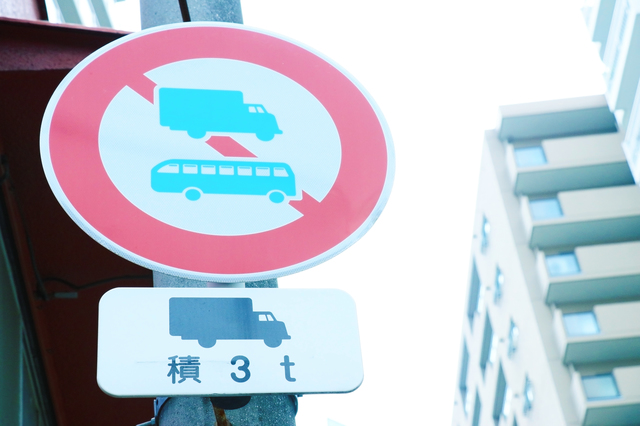
11 One-way street / No right turn – No left turn
On some roads in Japan, because the roadway is narrow, they are designated as one‑way streets, and at certain intersections, right or left turns are prohibited.
No‑turn signs or one‑way signs are indicated by blue arrow signs.
Penalties for traffic violations
Under Japan’s traffic laws, violations that may lead to accidents are subject to monetary fines (hansoku-kin) and penalty points added to your driver’s license.
The fine varies depending on the type of violation. For example:
• Failure to make a mandatory stop (not coming to a complete stop): 7,000 yen
• Running a red light: 9,000 yen
When a violation occurs, the police will issue a traffic violation ticket (blue ticket), and the violator must pay the fine at the designated bank.
Penalty points also vary depending on the violation. For example:
• Not wearing a seat belt: 1 point
• Running a red light: 2 points
When the total penalty points reach a certain level, administrative measures will be applied as follows:
• Reaching 6 points → your driver’s license will be suspended (you are not allowed to drive for a certain period)
• Reaching 15 points → your driver’s license will be revoked (the license becomes invalid and you must take the test again to obtain a new one)
Traffic violations can lead to serious accidents, so following traffic laws every day is extremely important.
Driving without a license, driving under the influence of alcohol, and causing serious traffic accidents are all subject to very severe penalties.
Traffic accidents – How to respond correctly
If you are legally residing in Japan with an appropriate residence status, you are allowed to drive a car after passing the driver’s license examination.
When participating in traffic—whether by car, motorcycle, or bicycle—there is always a risk of accidents. If an accident occurs and you do not handle the situation properly, the problem can become even more serious.
Therefore, responding correctly and following the proper procedure is extremely important.
Actions a driver must take when a traffic accident occurs
Rescuing injured persons (top priority)
If you leave the scene without providing assistance, this will be considered a hit‑and‑run (failure to fulfill the duty to rescue) and will result in very severe penalties.
While ensuring your own safety, you must provide first aid within your ability and call emergency services promptly.
Warning other vehicles behind you
Use a warning triangle to alert vehicles behind you and secure the accident scene.
If gasoline or oil is leaking, the risk of fire or explosion is extremely high due to cigarette embers or open flames, so smoking at the accident site is strictly prohibited.
Ensuring the driver’s own safety
When a driver panics, they may accidentally step into the traffic lane while using their phone to make a call, creating a high risk of a secondary accident.
After taking the minimum necessary measures, you should quickly move to the roadside or another safe location.
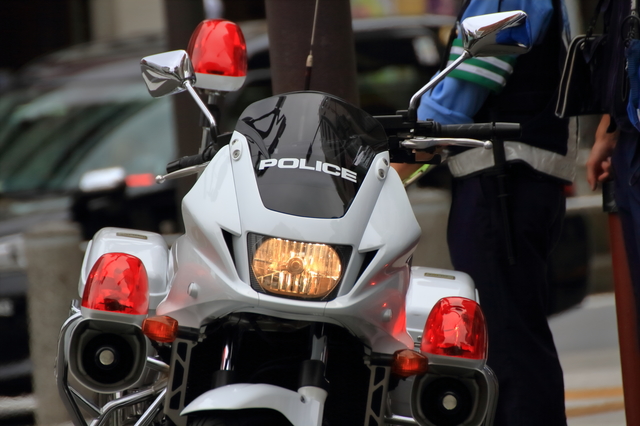
Calling the police (dial 110)
Contact the police or relevant authorities immediately.
Because these agencies have direct communication lines (hotlines), if someone is injured, the police will contact the ambulance and rescue teams on your behalf.
When a traffic accident occurs, many people fall into a state of panic. However, it is extremely important to carry out all essential steps, such as rescuing the injured and calling the police at 110.
These actions help prevent the situation from becoming more serious and ensure that proper emergency support arrives as quickly as possible.


Bicycle rules in Japan
In recent years, traffic accidents and violations of bicycle rules have become a social issue in Japan, leading to stricter regulations related to bicycle use.
If you violate these rules, you will be penalized regardless of nationality.
While living in Japan, you will likely use a bicycle frequently because of its convenience. However, understanding the basic bicycle rules in Japan will help you feel more secure and avoid unnecessary trouble.
Our office also provides free guidance on the basic rules for riding a bicycle.
Website Guide
1 【Home / About】
2 【Visa Types】
3 【Visa Troubles】
4 【Fees】
5 【Driver’s License】
6 【Traffic Rules】